I sold a couple of things on eBay recently and went ahead to print labels for the packages on DHL.de. The user interface is clean and understandable until there, though they validate (or rather invalidate) my bank code for a GiroPay payment a bit late and even with a misguiding error message (no, I have not entered a wrong bank code, its just that my bank isn’t set up for GiroPay). But this alone is not the reason for this post, the reason is what awaited me after I was billed…
My expectations were simple: I thought I would be redirected to some page which would generate my parcel label on the fly, provide it as easy PDF download and thats it. It was that easy actually with DHL’s German competitor Hermes, but no, DHL had to outsmart the whole process.
On the final page in DHL’s booking process you have three options:
1) Open the label in a Java applet for viewing and printing
2) Saving the label via the Java applet
3) Saving the label as PDF
The “default” way – using the Java applet – did not work out at all for me on the Mac, neither in Safari nor Firefox. The applet simply did not load at all and “saving” the applet apparently meant for the DHL guys to save the HTML in which the applet code is embedded… cool. It doesn’t make a difference if the applet is embedded in an offline or online webpage, if the applet *itself* does not work!
Anyways, the PDF link seemed to be more familiar anyways, so I headed there and opened the downloaded file in OSX’ Preview.app. This was the result:
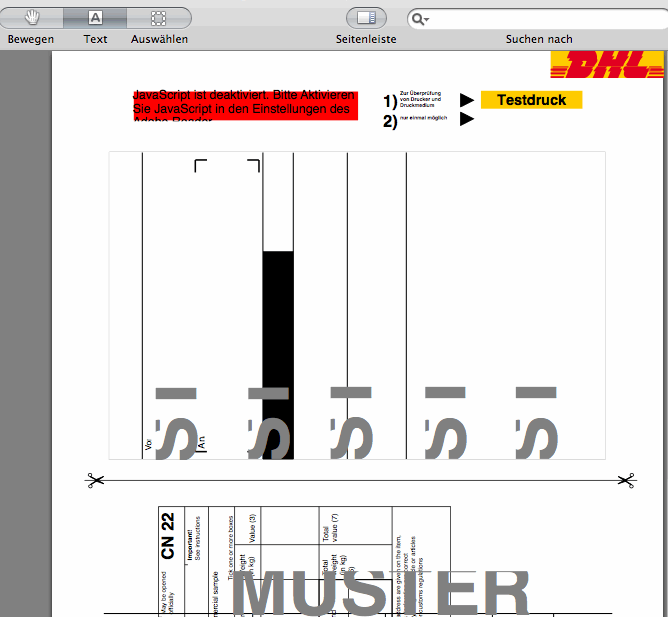
The text in the red box on the left says that Javascript is disabled in Adobe Reader. Are you serious guys? Do I really have to install this bloatware Adobe Reader just to print out a simple label?
I had no other choice apparently. If the money was not already theirs, I’d have stopped by now, but I was part of their process. Adobe Reader 9.20 was only a 32 MB download away (thanks god we all have broadband connections here – or do you think DHL would have paid for the roughly 90 minutes on a 56k dial-up connection?) and only 230 MB after installation, so I went ahead to the big moment – would I finally be able to view and print my beloved label?!
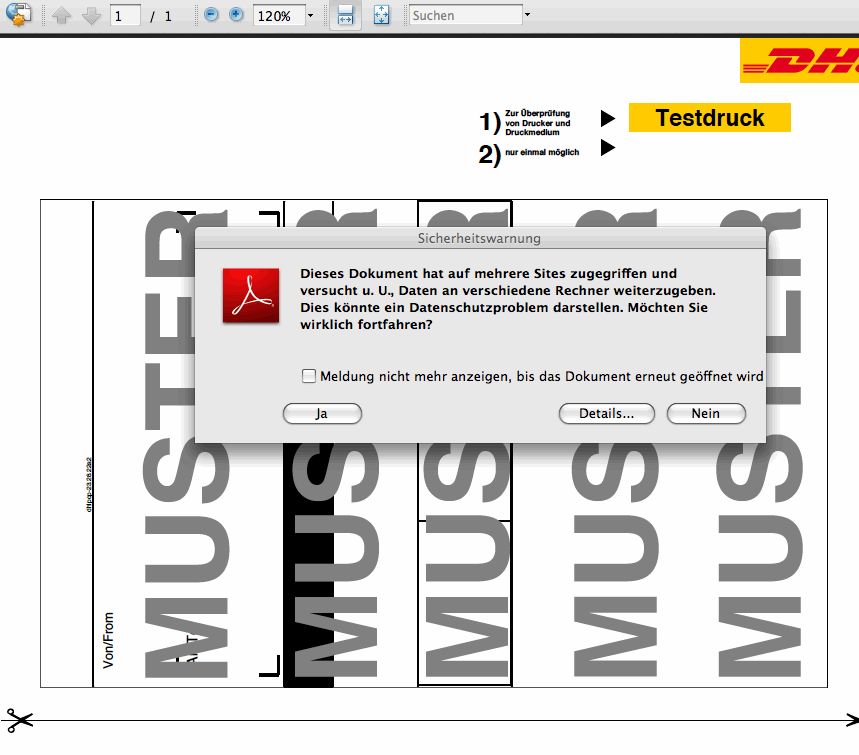
Almost – now I reconized why Javascript was needed here after all: The document was “dynamic” in the way that it seemed to fetch the actual label data from a webservice located at https://www.dhl.de/popweb/services/LabelService?wsdl. (You really thought you could hang up your dialup connection after the Adobe Reader download?) All the label’s contents are overprinted with “MUSTER” (German for “SAMPLE”), even after the data were fetched. Printing only seemed to be possible once via a special yellow “Postage print now” button which appeared right in the document once the data had been loaded. The print now button seemed to remove the “MUSTER” overprints from the final print, but I actually cannot tell you that for sure, because I made the mistake to print to a PDF printer in the printer dialog – and Adobe’s distiller told me then:
This PostScript file was created from an encrypted PDF file.
Redistilling encrypted PDF is not permitted.
Opening my original PDF for the second time left me with my loss of roughly 6 Euro alone:
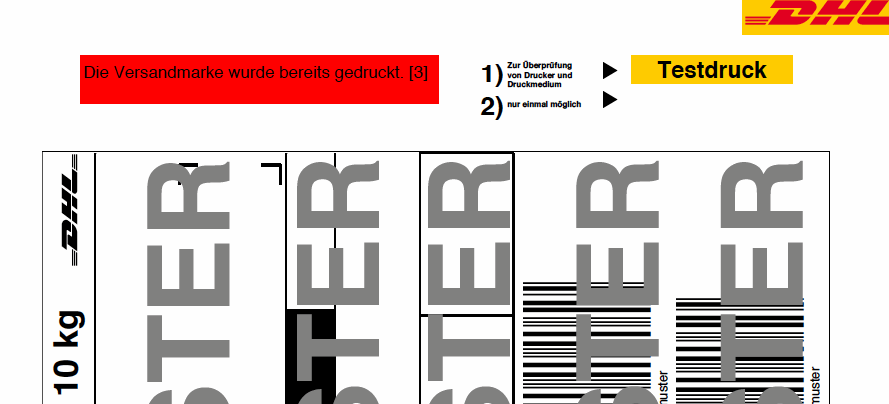
“This parcel label has already been printed”. Yeah, they got me. I’ve played around and I lost. I’ve tried to outsmart the process, but they outsmarted me. My last chance to see at least some of my money is to contact their service support – which I did by now – but whatever comes out of that, they also lost me as customer for sure.
I mean, seriously, this vendor lock-in is hilarious. Its quite simple to create a unique pattern or scanner code for a single package which cannot be re-used and tampered – what came over them to invent something that brain-dead instead? Either they’re over paranoid or their IT guys never have dealt with crypto or they have some other huge pain in the ass which forces them and their customers to this process.